Quick Guide
- Focus on thinning your coin deck early to improve consistency.
- Prioritize coins that generate immediate value or create strong synergies.
- Manage your coin bag to avoid overfilling and limiting strategic options.
- Don't be afraid to destroy less useful coins to refine your strategy.
Welcome to the chaotic yet captivating world of Coin Tavern, the unique roguelike where every coin flip can lead to fortune or folly. As you embark on your first runs, it's easy to get overwhelmed by the sheer variety of coins and the seemingly random nature of their effects. This coin tavern steam guide beginner path is designed to help new players navigate the initial challenges, avoid common pitfalls, and lay the groundwork for consistent success. Understanding the core mechanics and making smart decisions early on will transform your tavern from a chaotic mess into a well-oiled coin-flipping machine.
Understanding the Core Loop: Flipping for Fortune
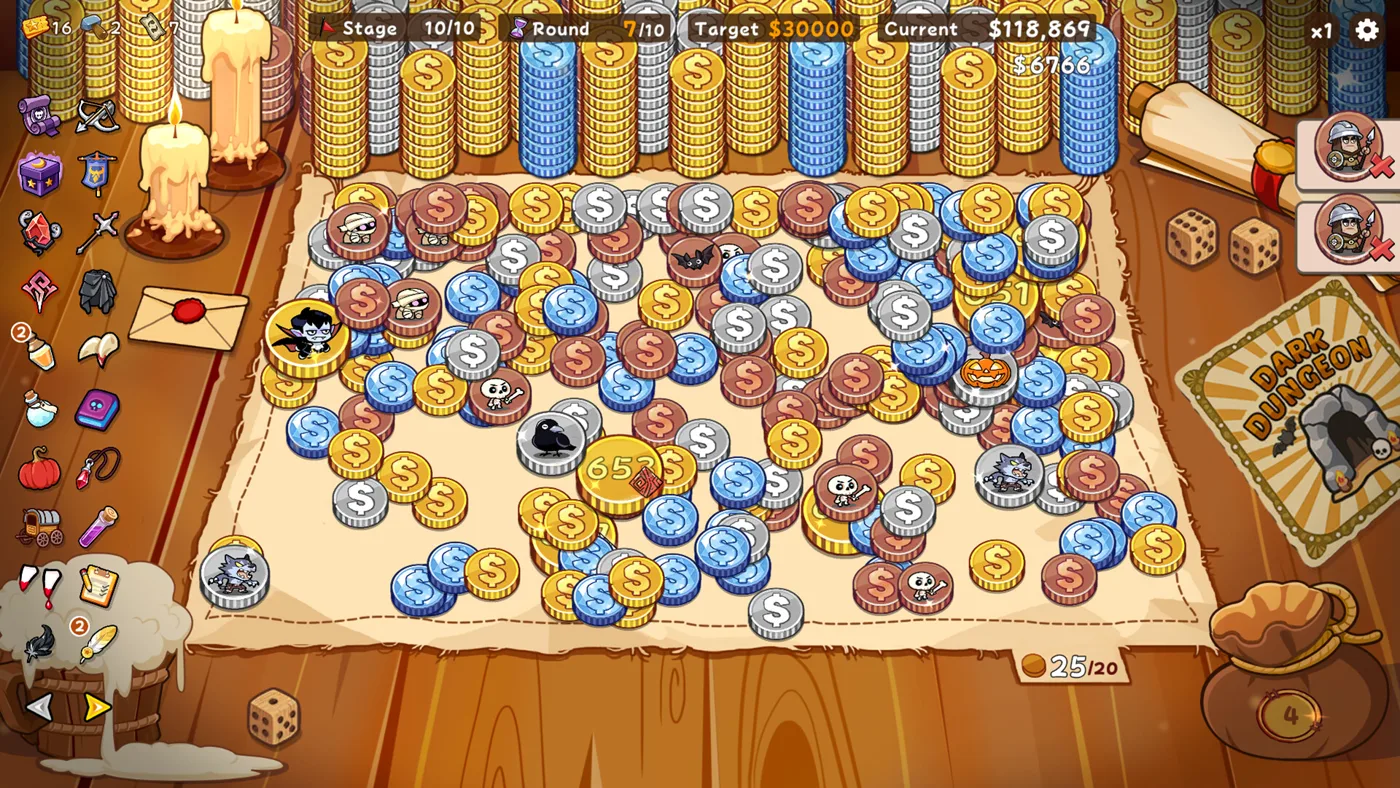
At its heart, Coin Tavern is a game about strategic coin-tossing. Each run begins with a modest collection of coins, and your goal is to grow your score by flipping them, triggering their unique effects, and building powerful synergies. Every coin "does something special," as one player noted, from generating more money and resources like eggs, honey, or fish, to destroying other coins, increasing values, or even transforming into new types.
The game is a roguelike, meaning each attempt is a fresh start, offering new opportunities and challenges. You'll progress through rounds, aiming to hit specific score targets (often referred to as "stage debt" by the community) to advance. Failing to meet these targets means your run ends. This constant pressure makes early-game efficiency crucial.
Your First Steps: Deck Management & Initial Goals
Your initial runs in Coin Tavern are all about learning the ropes and establishing a stable foundation. Don't worry about chasing complex, high-score builds right away.
Start Simple, Stay Focused
Instead of trying to force a specific, intricate build, focus on understanding how different coin types interact. In the early game, simple synergies are often the most effective. For instance, coins that generate resources like eggs or fish can be incredibly powerful if you also have coins that consume those resources for a bonus. A player trying to build around animals and skeletons often found success by focusing on coins that generated eggs, as these could "transform into anything" or make other coins "better."
Thinning Your Deck
One of the most critical beginner strategies in any deck-building roguelike, and especially in Coin Tavern, is deck thinning. As you acquire more coins, your "bag is getting full," which can dilute your strategy and make it harder to draw the coins you need. If you have coins that are "just here for no reason," as one player observed, getting rid of them can significantly improve the consistency of your flips. Look for opportunities to destroy or remove less effective coins from your deck to increase the chances of drawing your strongest combinations.
Prioritize Early Money Generation
Money is the lifeblood of Coin Tavern. It allows you to buy new coins from the shop, refresh shop selections, and acquire relics. In your first runs, prioritize coins that reliably generate money. Basic coins that increase in value or provide direct monetary gains are excellent starting points. The faster you can accumulate wealth, the more options you'll have to refine your deck.
Understanding Stage Debt (Targets)
Each round presents a score target you must meet. These targets escalate quickly (e.g., from 2500 to 5000). Your flips need to be paced to ensure you can reach these goals. While it's tempting to hold onto powerful coins, sometimes using them earlier to secure the round's target is the smarter play. A common beginner mistake is not generating enough value early, leading to a scramble in later rounds that often ends in failure.
Essential Coin Types and Synergies for Beginners
While every run is different, some coin types and synergistic relationships prove consistently useful for new players.
The Power of Eggs
Eggs are a versatile resource. They can be consumed by certain coins for effects, or, as observed by one player, they can "transform into anything." Coins that generate eggs (like chickens) combined with coins that benefit from eggs (like rats) can form a potent early-game engine. Look for upgrades that make your eggs "better" or increase their generation.
Early Game Animal Focus
Many animals offer straightforward benefits.
- Fish: Coins that "catch a fish" can increase their value forever, making them compounding assets. Pairing fish-generating coins with those that consume fish can create a steady income stream.
- Rats & Cheese: Rats often "eat the cheese" for value. If you can generate cheese, rats become a reliable way to boost your score.
- Bears & Honey/Humans: Bears can "eat the freaking human" or honey for significant gains. If you find a way to generate these resources, bears can become powerful.
Destruction Builds
A less obvious but potent strategy involves coins that destroy others. Some coins gain value when other coins are destroyed, or destroy themselves for a benefit. As one player discovered, a "destruction build" can be effective for "thinning out the deck" and triggering specific effects. This is a more advanced beginner path but worth exploring once you understand basic synergies.
Value Multipliers
Any coin that increases the value of other coins or itself, especially "forever," is a prime target. These compounding values are how you reach those high score targets in later rounds. Look for coins that jump, making all nearby animals jump once, or increase value upon catching a fish.
Focus on compounding value early.
Coins that increase their own value or the value of others "forever" are crucial for scaling your score and meeting later stage targets. Prioritize these when building your deck.
Smart Shopping and Strategic Rerolls
The shop is your primary source of new coins and upgrades. Knowing when and how to use it effectively is a key part of your coin tavern steam guide beginner path.
- When to Buy: Always consider how a new coin fits into your existing strategy. Does it synergize with coins you already have? Does it address a weakness in your deck? A new coin that doesn't contribute or actively harms your current build (like a pirate stealing money) might not be worth the cost.
- When to Reroll: If the current shop selection doesn't offer anything useful, don't hesitate to spend money on a reroll. Sometimes, a single reroll can present the exact coin you need to complete a synergy or overcome a challenge. Don't be too stingy with your money if a better coin is critical.
- Don't Overfill Your Bag: As mentioned, your coin bag has a limit. While a diverse deck can be good, a bloated one will hinder your progress. Be selective with your purchases, especially in the early game, to maintain a lean and efficient deck.
Avoiding Common Beginner Pitfalls
Even with a solid strategy, Coin Tavern can be tricky. Here are some common mistakes to watch out for:
Don't Be Afraid to Destroy
The game often presents you with opportunities to destroy coins. Sometimes, this is the best way to get rid of weak or counterproductive coins, allowing your stronger synergies to shine. A player struggling with a full bag eventually realized they needed to "get rid of y'all cuz y'all just here for no reason, man." Embrace destruction as a form of deck management.
Watch Your Coin Bag
It's easy to accumulate too many coins, especially if you're buying every seemingly good option. A full bag can lead to drawing irrelevant coins, making it harder to execute your strategy. Keep an eye on your coin count and be willing to pass on purchases if your bag is getting too full.
The Pirate Problem
Community reports and player experience indicate that certain coins, like pirates, can steal your money. While tempting to acquire for their own benefits, be mindful of their downsides, especially if your economy isn't robust enough to absorb the losses.
Over-reliance on Single Coins
While powerful coins are great, relying too heavily on one coin without backup or supporting synergies can be risky. If that coin doesn't appear when needed, or if its effect is countered, your entire run can crumble. Diversify your synergies to have multiple paths to victory.
Coin Tavern is a game of constant adaptation and learning. By focusing on smart deck management, understanding basic synergies, and avoiding these common beginner mistakes, you'll be well on your way to mastering the coin-flipping chaos and achieving those big scores. Keep experimenting, and most importantly, have fun!
FAQ
Q: What is the most important thing for a beginner to focus on in Coin Tavern?
A: For a beginner path in Coin Tavern, the most important thing is effective deck management. Prioritize thinning your deck to ensure you draw your most impactful coins consistently and focus on early money generation to give yourself more options.
Q: How do I get better at Coin Tavern?
A: To get better at Coin Tavern, experiment with different coin synergies, learn which coins generate the most value for your current build, and practice smart shop management. Don't be afraid to destroy less useful coins to refine your strategy.
Q: What are some common early mistakes in Coin Tavern?
A: Common early mistakes include overfilling your coin bag, not prioritizing money generation, trying to force complex builds too early, and not destroying weak coins. These can lead to inconsistent runs and difficulty meeting stage targets.
Q: Where can I find Coin Tavern on Steam?
A: You can find Coin Tavern on its official Steam page at https://store.steampowered.com/app/4358310/Coin_Tavern/.